Top 10 Features in New Kia Syros 2026 You Must Know
1. Refreshed Sporty & Rugged Front and Rear Design
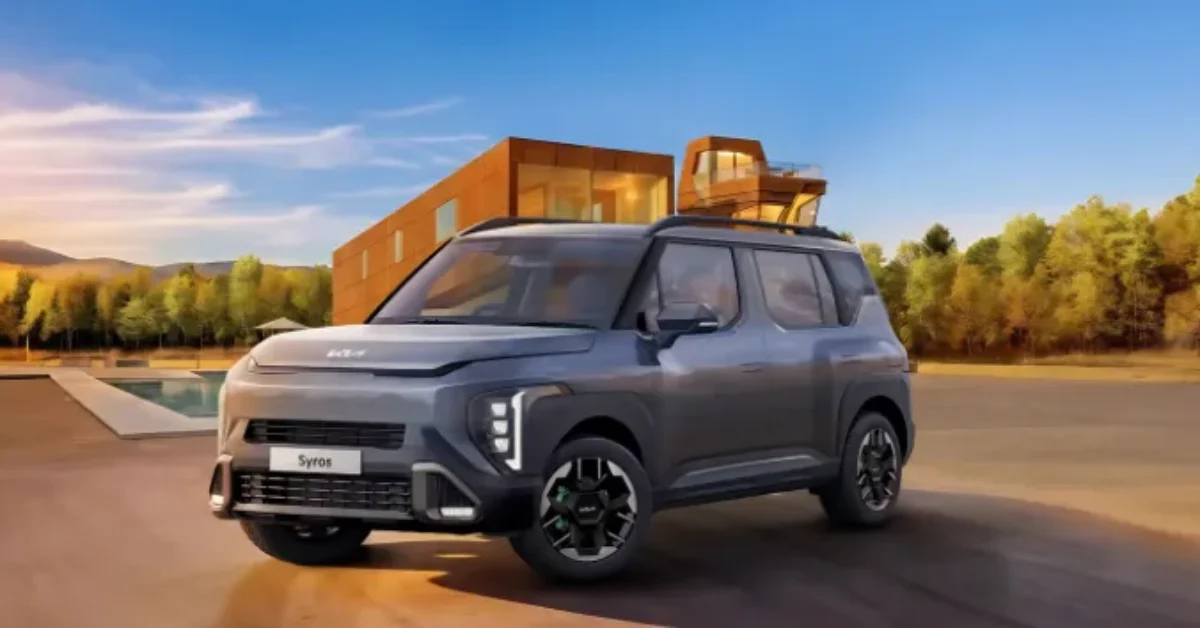
Let’s start with what you actually notice first — the way it looks on the road. The 2026 Syros got a proper design refresh, not just a badge change. The front bumper has been completely redesigned with body-coloured aero inserts that give it a more sculpted, premium look. Glossy black skid plates have been added up front too, making it look tougher and more SUV-like without going overboard.
Kia also added LED fog lamps at the front — a small change that makes a noticeable difference in visibility and aesthetics, especially at night or in rain. Moving to the rear, the bumper gets a matching treatment, and there’s now an LED high-mounted stop lamp that makes the tail look significantly more premium.
The side profile also gets attention — glossy black roof rails, updated ORVM finishes, and body-coloured side garnish. It all adds up to a car that looks cohesive and more intentionally designed than the outgoing version. The Syros was already a head-turner with its boxy, upright stance — this update sharpens that personality further.
2. The 30-Inch Trinity Panoramic Display — It’s Actually Stunning
This is the one that people keep talking about, and rightfully so. The Syros packs a 76.2cm (30-inch) Trinity Panoramic Display — a single integrated panel combining three screens into one seamless unit. You get a 12.3-inch touchscreen infotainment system, a 12.3-inch digital instrument cluster, and a 5-inch climate control touchscreen all in one continuous stretch of glass.
It sounds gimmicky until you actually see it — and then it just looks genuinely impressive, even by premium car standards. Wireless Android Auto and Apple CarPlay come built-in, so you’re not hunting for a cable every time you get in. The ‘Hey Kia’ voice assistant is also onboard, letting you control things hands-free while keeping your eyes on the road.
3. 5-Star BNCAP Safety Rating — Not Just a Number
The Kia Syros earned a 5-star rating in the Bharat NCAP crash tests — and the 2026 update retains that rating. In a segment where safety ratings vary wildly, this is a genuinely big deal, especially for families. The Syros was built on Kia’s K1 platform with high-strength steel construction, and the test results back up the build quality.
Standard safety equipment across all variants includes:
• 6 Standard Airbags
• Electronic Stability Control (ESC)
• ABS with EBD
• Tyre Pressure Monitoring System (TPMS)
• Rear View Camera
• Electronic Parking Brake with Auto-Hold
• All-Wheel Disc Brakes
• In-built Dashcam
• Hill Start Assist
• Front & Rear Parking Sensors
Important note: Kia removed the Level 2 ADAS suite and the 360-degree camera from the Syros with this MY26 update. That’s a step back for buyers who were interested in those features specifically. It’s a trade-off Kia made to bring the price down — but worth knowing before you head to the showroom.
4. Diesel Automatic Now Starts from HTK+ — Big Win for Buyers
If you’ve been holding off on the Syros because you wanted a diesel automatic but the price was too steep, here’s your good news: the Diesel AT variant is now available from the HTK+ trim onwards, priced at ₹10.73 lakh (ex-showroom). Earlier, you had to go all the way to higher trims — now it’s much more accessible.
The diesel engine is the 1.5-litre unit making 114 BHP and 250 Nm — a torque-rich option that makes a lot of sense for long highway commutes or mixed city-highway usage. Paired with the 6-speed automatic torque converter, it’s a smooth, relaxed way to drive without fatiguing yourself in stop-and-go city traffic.
The petrol side stays unchanged — a 1.0-litre turbocharged unit producing 118 BHP, offered with a 6-speed manual or a 7-speed dual-clutch automatic. The DCT on the petrol is nippy and quick-shifting, making city driving genuinely fun.
5. Ventilated Rear Seats — A First in Segment
Most SUVs in this price range give you ventilated front seats if you’re lucky. The Syros goes further and offers ventilated seats for both front and rear passengers — something Kia officially calls a first-in-segment feature. In the Indian climate, especially in cities like Delhi, Mumbai, or Chennai, rear seat cooling is genuinely appreciated for daily passengers and family members.
The second row also gets recline and slide functions with a 60:40 split configuration, letting you adjust legroom and boot space based on how many people are travelling. This kind of flexibility is usually reserved for bigger, more expensive MPVs. Having it in a sub-4-metre SUV is smart packaging from Kia.
6. Harman Kardon 8-Speaker Premium Sound System
Audio quality in budget and mid-range SUVs is usually an afterthought. The Syros takes a different approach by packing in a proper Harman Kardon premium 8-speaker sound system. Harman Kardon is a high-end audio brand — the same kind of system you’d normally find in cars costing two or three times more.
The difference is noticeable if you care about music. Whether you’re playing something bass-heavy or acoustic, the system has enough clarity and depth to make long drives genuinely enjoyable. You also get 64-colour ambient lighting to set the mood inside the cabin — a small detail that contributes to the premium feel the Syros punches well above its price to deliver.
7. Dual-Pane Panoramic Sunroof
Single-pane sunroofs are common now — the Syros goes one better with a dual-pane panoramic sunroof that opens up the cabin considerably. Both front and rear passengers get to enjoy natural light and a more air feel. On long drives or weekend trips, this one feature alone changes the character of the car.
The tall, upright design of the Syros already gives it a more spacious feel compared to sloped-roof crossovers. Add the panoramic sunroof on top of that, and the cabin genuinely feels larger than its sub-4-metre footprint would suggest. It’s paired with rear sunshades too, so you’re not baking in the Indian summer when the roof is closed.
8. Kia Connect 2.0 — 80+ Connected Car Features & OTA Updates
Connected car technology is becoming a must-have, and the Syros takes it seriously. Kia Connect 2.0 offers over 80 connected car features — ranging from remote lock/unlock and engine start to real-time vehicle health monitoring and geofencing alerts.
Over-the-Air (OTA) software updates mean you’ll never need to visit a service centre just to update your car’s software. The system can update itself overnight — keeping features current and fixing any bugs without inconvenience. Kia Connect Diagnostics also monitors the vehicle’s health and alerts you to any issues before they become expensive problems.
The car also comes with a built-in air purifier — a surprisingly practical inclusion for urban commuters dealing with pollution daily. Multiple drive modes (Eco, Normal, Sport) let you tune the throttle response and dynamics to suit your mood or road conditions.
9. Three New Colours + 17-Inch Alloys with Neon Brake Calipers
Kia didn’t skimp on visual personality with this update. Three entirely new exterior colours have been added: Magma Red, Ivory Silver Matte, and Ivory Silver Gloss — bringing a total of nine colour options for the Syros. That’s a genuinely wide palette for a car in this segment.
The top HTX and HTX(O) trims now come equipped with new 17-inch Sporty Crystal Cut Alloy Wheels paired with Neon-coloured brake calipers. Yes, actual neon brake calipers — the kind you normally see on performance or sports cars. It’s a bold, attention-grabbing detail that makes the Syros look more premium and sporty at a standstill.
10. Expanded Variant Lineup — More Choice at Every Budget
One of the most significant changes in the MY26 update is the completely reshuffled variant strategy. Kia has introduced four new trims: HTE, HTE(O), HTK+(O), and HTX(O). The starting price has been brought down to ₹8.39 lakh (ex-showroom), making the Syros more accessible than ever before.
What this effectively means is that premium features have been pushed down into lower price points. You no longer need to buy the top-of-the-line trim to get a well-equipped car. Features like ventilated seats, wireless charging, and the panoramic sunroof are spread more democratically across the range.
It’s a smarter approach to a competitive market. Rather than making customers stretch their budget to get the good stuff, Kia is now making the good stuff reachable at more price points. For buyers comparing the Syros against the Tata Nexon, Maruti Brezza, Hyundai Venue, or Skoda Kylaq — this broader lineup gives you much more flexibility to find the right balance of features and budget.
Kia Syros 2026 — Honest Pros & Cons
What We Love ✔
• 30-inch Trinity Display — genuinely impressive tech for this price
• 5-star BNCAP safety rating retained across all variants
• First-in-segment ventilated rear seats
• Diesel automatic now accessible at ₹12.73 lakh
• Harman Kardon audio that punches above its price
• 80+ connected features with OTA updates built in
• Nine exterior colour options — exceptional variety
• Exceptionally spacious cabin for a sub-4-metre SUV
What Could Be Better ✘
• Level 2 ADAS removed in MY26 update — a step backward
• 360-degree camera also dropped with this update
• Highway NVH levels are not best-in-class
• Petrol performance feels modest on the open road
• Rivals like XUV 3XO offer stronger driving dynamics
Final Verdict: Should You Buy the 2026 Kia Syros?
If you’re looking for a family-focused, feature-rich compact SUV that doesn’t compromise on interior quality or safety — the 2026 Kia Syros is a very strong buy. The MY26 update makes it smarter, better looking, more accessible in pricing, and easier to justify at multiple budget levels.
The removal of ADAS and the 360-degree camera is a genuine miss, and Kia should have found a way to retain them at the top trims at least. But everything else — from the spectacular Trinity Display to the rear ventilated seats, Harman Kardon audio, and 5-star safety — makes the Syros hard to beat in its price band.
It competes directly with the Tata Nexon, Hyundai Venue, Maruti Brezza, Mahindra XUV 3XO, and Skoda Kylaq. Among those, the Syros offers the best cabin experience and the most premium interior feel — which for a lot of families, is exactly the right priority. At ₹8.39 lakh starting, it’s a genuinely compelling package in 2026.